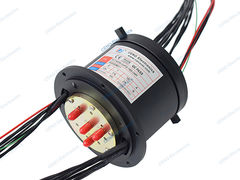
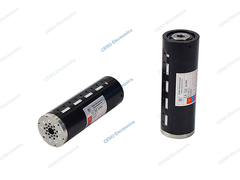
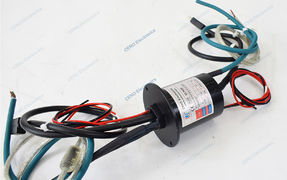
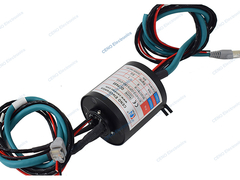
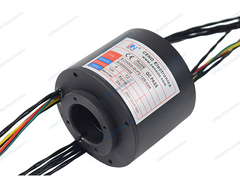
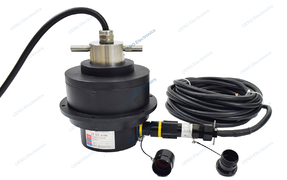
Pneumatic hydraulic slip ring with air rotary union

Other Videos
December 26, 2025
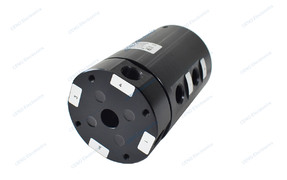
Brief: In this walkthrough, we highlight key design ideas and how they translate to performance. You'll see a detailed demonstration of the 2 channels pneumatic rotary union with air for industrial robotic arms, showcasing its 360° rotation capability and how it integrates with slip rings to transmit control signals in demanding applications.
Related Product Features:
  • Conducts 2 channels of air with a pressure range from -80Kpa to 0.5MPa.
  • Features 360° continuous rotation for transmitting various media like liquids, compressed air, and inert gases.
  • Constructed from special materials for wear resistance, corrosion resistance, and leak-free operation.
  • Offers 1-24 channels option and can combine to transmit power and signal.
  • Suitable for automatic machines, turntable testing, packing, filling, and medical equipment.
  • Available with customizable options for channels, media, port size, pressure, sealing type, and materials.
  • Compact design with an outer diameter of 22mm and working temperature range from -20°C to +60°C.
  • Integrates with slip rings to transmit various control signals for enhanced system performance.
FAQs:
  • What media can the pneumatic hydraulic rotary union transmit?
    It can transmit various media including liquids, compressed air, steam, vacuum, nitrogen, hydrogen, and other inert gases, supporting 360° rotation.
  • How many channels are available for the pneumatic rotary union?
    The standard model offers 2 channels for air, with options available for 1 to 24 channels, and it can be combined to transmit both power and signals.
  • What are the key applications for this pneumatic rotary union?
    It is widely used in automatic machines, turntable testing machines, packing equipment, filling machinery, and medical equipment, providing reliable performance in rotating systems.
  • Can this rotary union be customized for specific requirements?
    Yes, customization options include channels and media, port size and pressure, sealing type, contact and housing materials, as well as working speed and temperature to fit your application.